Acoustic Niche Partitioning in Tree Crickets
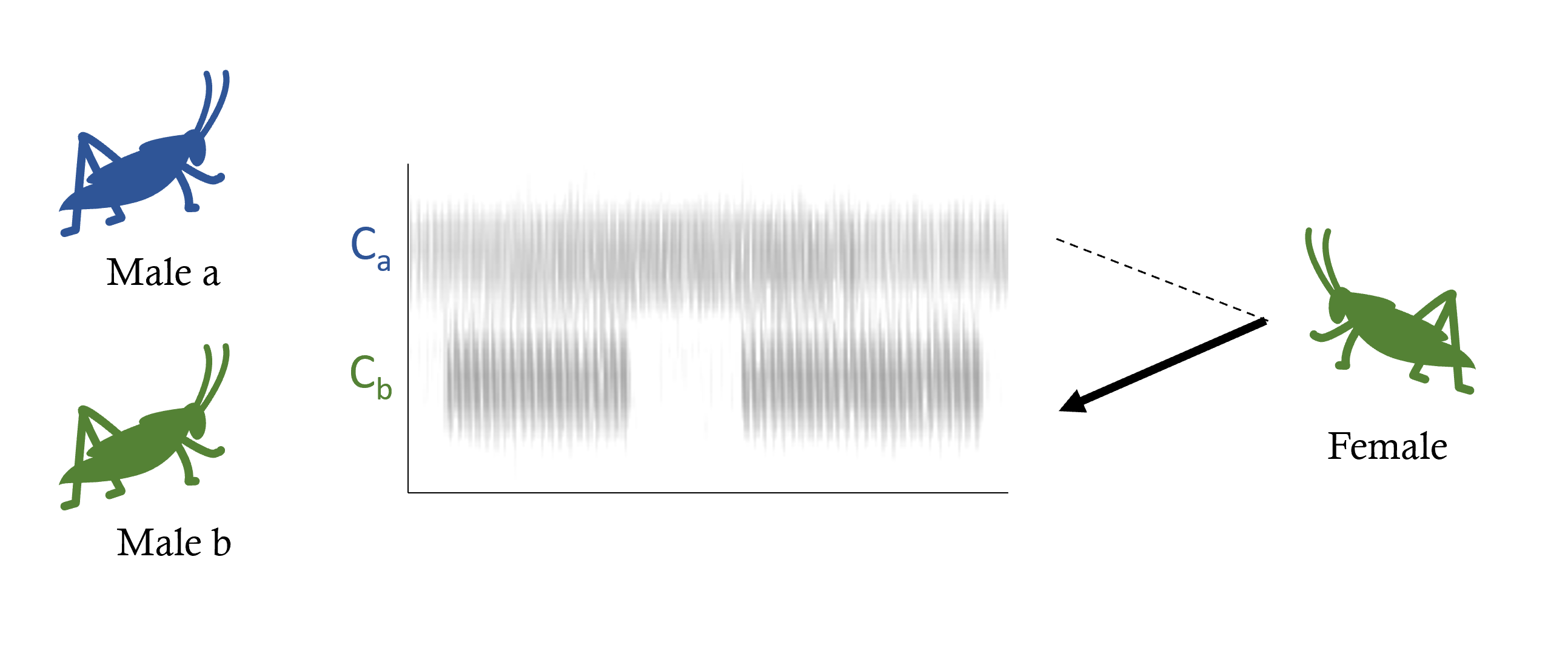
Partitioning is an important strategy in sympatric species in order to maintain reproductive isolation. Acoustically communicating organisms can adapt to spatial, temporal, or acoustic partitioning. The latter occurs through variations in signals, i.e., in order to identify conspecifics, the receiver has to look for certain species-specific call characteristics. This is crucial, especially in the scenario where two or more sympatric species call at the same time. I tested partitioning due to call differences in two sympatric tree cricket species – Oecanthus indicus and Oecanthus rufescens, by using playback experiments. I found that carrier frequency could play a major role in species recognition. Macro-temporal features such as call duration and inter-call interval did not have any significant effect on the female responses. Future experiments can be designed to check for the multivariate selection, and tease apart mate recognition and mate choice properties of calls. Following these experiments with a model-based approach will contribute to existing models used to study the evolution of the signals and reproductive isolation.
Supervisors: Dr. Aniruddha Datta-Roy and Dr. Rittik Deb
Song Structure and Mate Preference in a Katydid
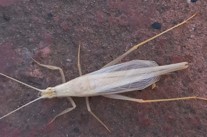
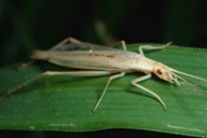
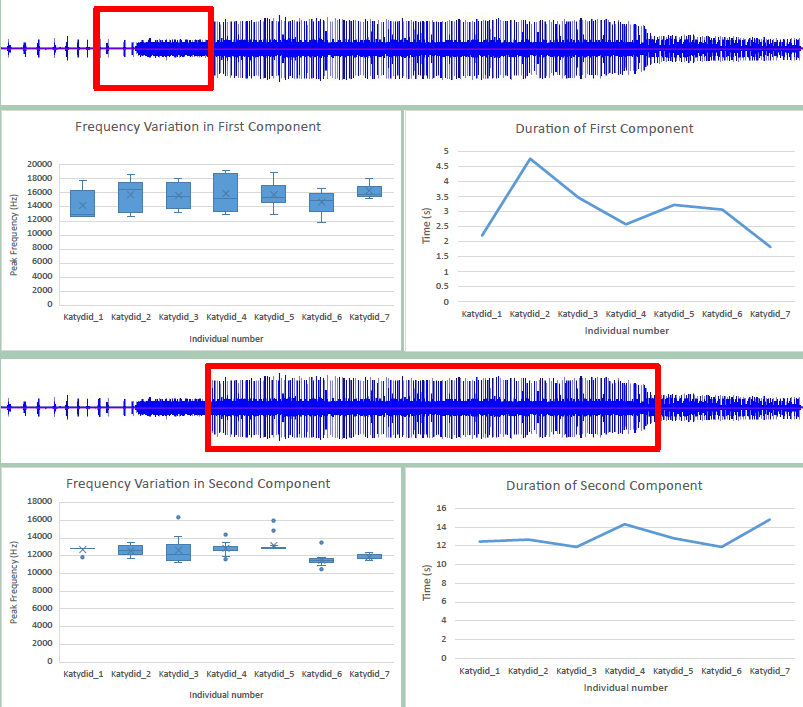
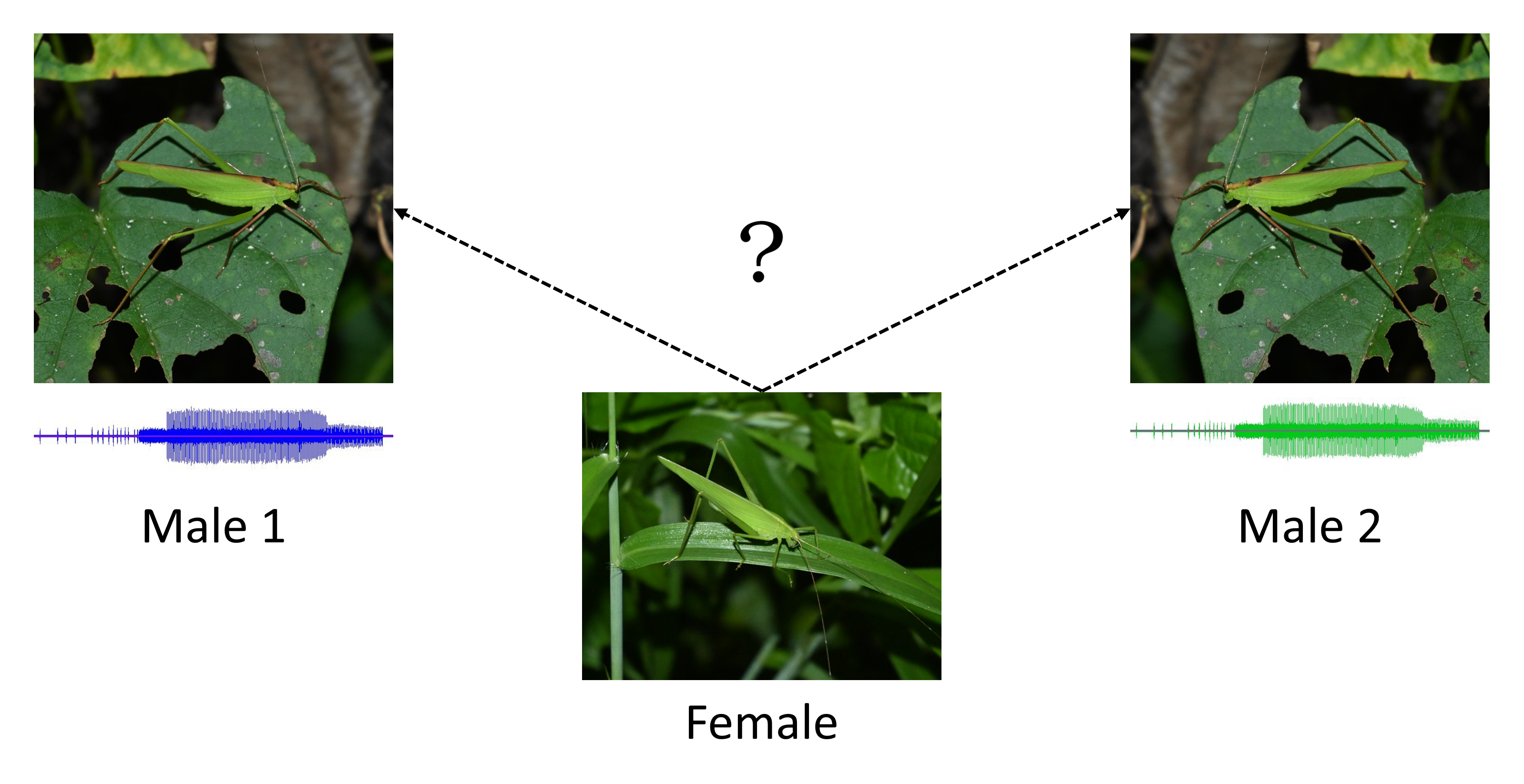
Intersexual signalling in the context of mate preference is a major driver of sexual selection. With respect to acoustic communication, males usually have certain characteristics in their calls, serving as markers for their fitness, that determine how attractive they will sound to the female. Multiple studies on Orthopteran acoustic signalling have revealed a vast diversity of call structures and mate preferences across different taxa, although a lot of species are understudied. I investigated the song structure of a Phaneropterine katydid Ducetia sp. to identify the female mate choice. There are two distinct components of the song, one of which is more variable across individuals with respect to its spectral and temporal features. In order to test whether there is a distinction between the stable and variable components, I designed a series of playback experiments which are in progress. My goal is to combine this with a phylogenetic approach to better understand the signal evolution of the Ducetia species group.
Supervisors: Dr. Aniruddha Datta-Roy and Dr. Rittik Deb
Costs of Grouping in Guppies with respect to escape
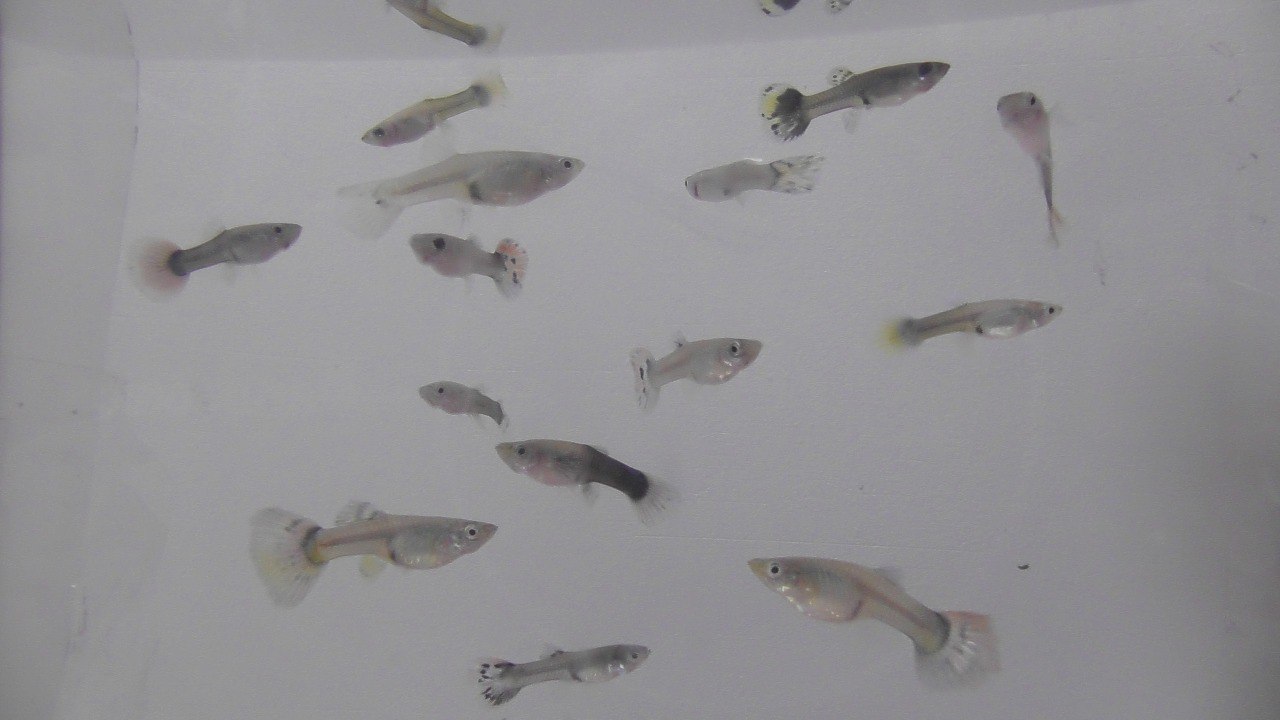
Grouping in prey can reduce per capita predation risk through dilution effects. Research shows that an individual’s risk of being attacked by a predator may depend not only on the group size but also on its spatial position in the group. However, direct tests of how group size and position in the group affect individual predation risk remain untested. I compared three escape parameters – speed, trajectory, and flight initiation distance (FID) – of guppies (Poecilia reticulata) in varying group sizes and positions in response to a robotic fish predator. Preliminary analysis shows that individual escape speed of solitary fish is significantly higher than grouped guppies. Solitary fish speed was also higher than the mean group speeds. FID increased with group size, suggesting that larger groups can better detect predators. A detailed analysis will give robust evidence of how escape abilities vary with group size and position. The study will reveal whether the costs incurred during prey escape influence grouping decisions in prey.
Supervisors: Dr. Manvi Sharma and Dr. Jitesh Jhawar